
WORKING GROUP 2

WORKING GROUP 2

Methods and tools for standardization, coding and classifying causes of death

Working Group 2 will coordinate activities related to the digitization, standardization and coding of the causes of death into the ICD10h, and the development tools to classifying ICD10h-codes into disease groups. It will do so by developing the existing pilot-project of the ICD10h into a global standard for the coding and classification of historical cause of death data.

Leadership

Dr Mayra Murkens

WG2 Co-Leader

News

Output

ICD10h is a historic cause of death coding and classification scheme for individual-level historic causes of death. It takes inspiration from the WHO’s ICD10, supplying additional codes for archaic terms together with a suggested categorisation that allows broad disease groups to be followed over time and between locations. It is a flexible system which allows researchers to code, classify and study historic (h), individual level, cause of death information both in fine detail and at more aggregated levels. The system is still under development, and periodic updates will add new codes, new categorisations, and provide new lists of exemplar coded strings in different languages.

How to request new codes: If you would like to request a new code for a historic cause of death that does not appear in the Code list, please use the following form (N.B. make sure you have read the guidance in the manual before applying for a new code, and only apply if you are sure that no appropriate code already exists AND if a reasonable number of deaths in your database have been given that cause): Great Leap: ICD10h new code requests

ICD10h files

Notes

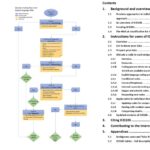
  1. Manual – please read this before using the system!
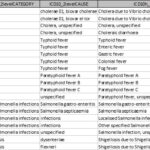
  2. Codes – a full list of codes and standardised disease descriptions, and a general categorisation (Histcat).
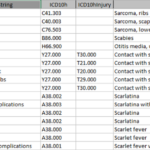
  3. Historic strings – an exemplar list of english language strings found in the historic record with their ICD10h codes. Please note this list is not meant to be exhaustive and should always be used in conjunction with the full list of Codes.
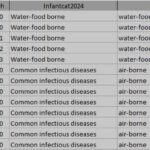
  4. Infant categorisations – a bespoke categorisation for historic infant deaths (a list of codes associated with each category).
  5. ICD10h was originally published in 2024, but these files link to an updated version published in June 2025 (version 2). The 2025 version adds a small number of new codes, and introduces a small number of changes and corrections. Changes are listed in separate files associated with each publication and summarised in the preface to the new version of the manual.
  6. If you would like to participate in a working group to create new categorisations (or replicate existing ones using ICD10h codes) or to contribute to lists of historic strings in your language, please get in touch with one of the working group leaders.
Scroll to Top