By Edward Morgan
I couldn’t have asked for a more invigorating start to the 6th Conference of the European Society of Historical Demography in Bologna than our pre-conference workshop on 9th September. Held in the atmospheric Sala dei Poeti at Palazzo Hercolani, with its Renaissance charm providing a fitting backdrop, the event brought together scholars from across Europe and beyond to delve into “Exploring Sources and Databases on Causes of Death in Historical Societies (1800-1950)”. Organised by Working Group 1 of the GREATLEAP network – our team dedicated to inventorising cause-of-death sources and framing key research questions – it was a day that truly highlighted the detective work at the heart of historical demography.
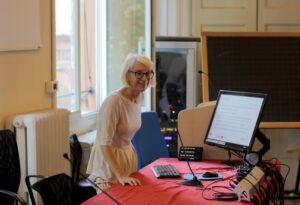
The workshop kicked off with two sessions on Parish and Civil Data Sources, chaired by Grażyna Liczbińska. These set the tone by showcasing the richness and challenges of everyday records. From Sara Luostarinen’s overview of Finnish databases and digital tools, which illuminated how Nordic precision can track mortality patterns, to Ciara Breathnach’s insights into Irish cause-of-death registration from 1864-1970, the talks revealed how these sources – often incomplete or biased – help us reconstruct health inequalities. Mélanie Bourguignon’s discussion of Belgian data from 1851-1950 echoed this, stressing the potential for studying urban-rural divides, while Mathias Mølbak Ingholt’s exploration of Arctic mortality in Greenland added a poignant layer on environmental extremes. Linking these was a common thread: how parish registers and civil records, when digitised and linked, transform fragmented entries into narratives of societal vulnerability.
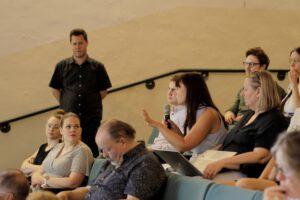
The afternoon shifted to more specialised themes. Tim Riswick chaired the Military, War and Hospital Databases session, where stories of conflict’s toll emerged vividly. Elena Crinela Holom’s work on Transylvanian hospital deaths during the modern era underscored how healthcare institutions preserved vital records amid upheaval, while Elina Nordung Omnell’s analysis of hospital journals from Umeå during the Finnish War of 1808-1809 highlighted the raw insights war-time medical sources offer into mortality under duress.
Michail Raftakis then led the Urban Populations Databases session, where Grażyna Liczbińska’s “needle in a haystack” metaphor for Poznań’s 1830-1900 records captured the interpretive hurdles we all face. Talks like Sarah Heynssens’s on Antwerp’s citizen-science project and Paulo Teodoro de Matos’s on Portuguese inequalities demonstrated innovative ways to overcome these, turning urban death logs into windows on social disparities.
By the close, with final remarks from the organisers, the workshop felt like a collaborative triumph – 86 attendees buzzing with ideas for future partnerships. It reinforced WG1’s mission: by inventorying these diverse sources, we’re not just cataloguing deaths but illuminating the human stories behind them, from famines in Brazil (Klaus Fonseca Hoeltgebaum) to morbidity in historic England (Harry Smith). Here’s to more leaps forward in understanding our past’s deadly legacies.
